当研究室が参画するkoyart(コヤート)は大学の研究室と農家,企業が連携し,地域の課題に取り組む組織である。主として野菜の販売小屋をテーマに,新しい技術を用いて,地域の活性化を目指すプロジェクトを行っている。
大河内研究室では2021年10月23日(土)~24日(日)の2日間,横須賀美術館で開催されるイベント『koyart~小屋とアートと地域の新鮮野菜に出会う~』に
学生が主体でデザイン,製作した野菜の無人販売所を出展した。今年度が初の出展である。
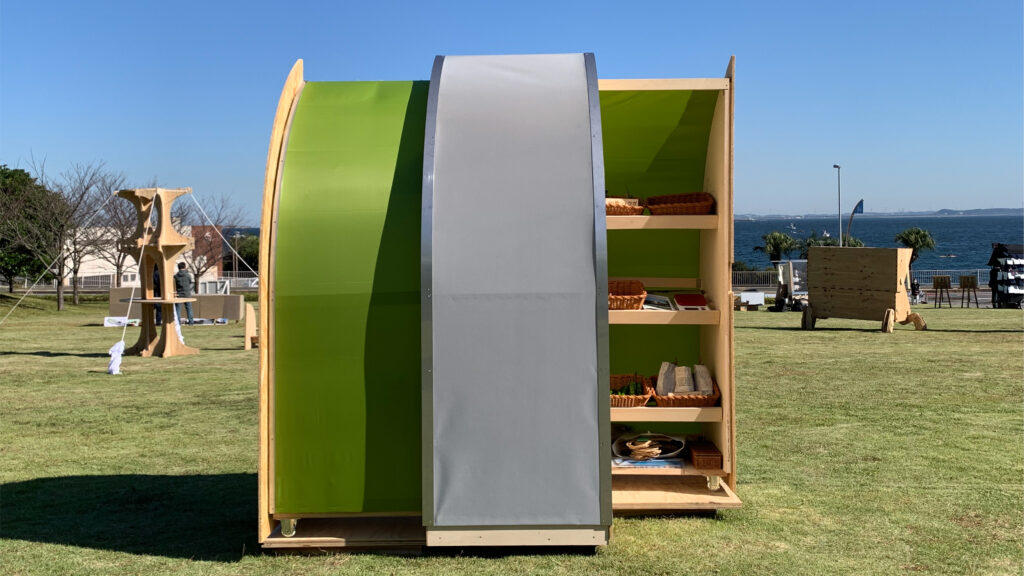
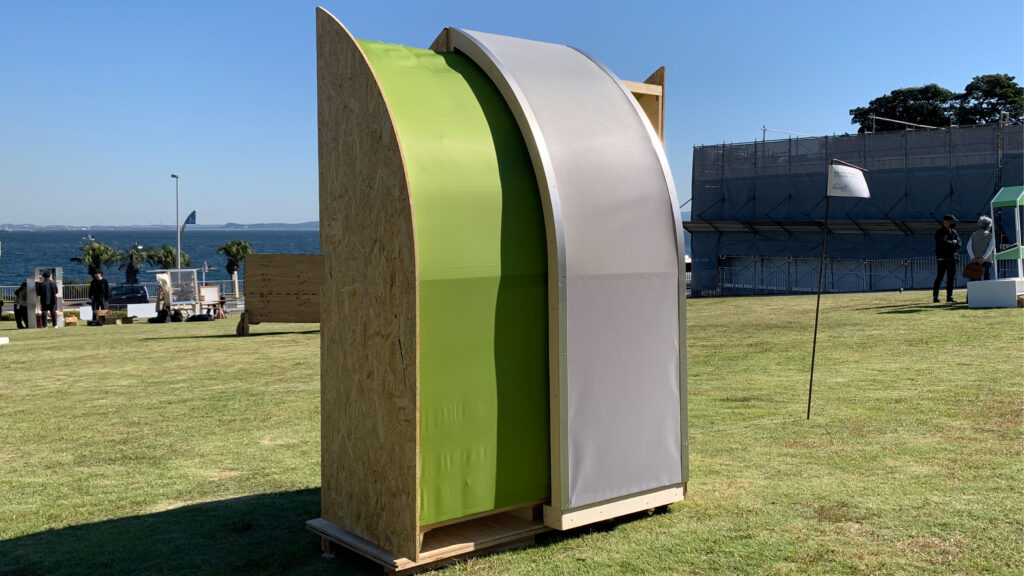
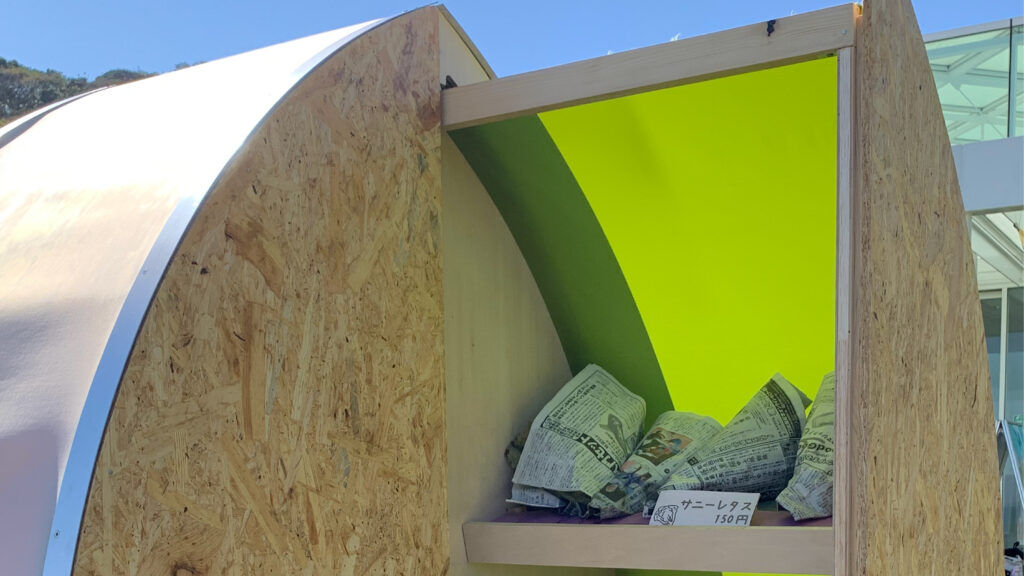
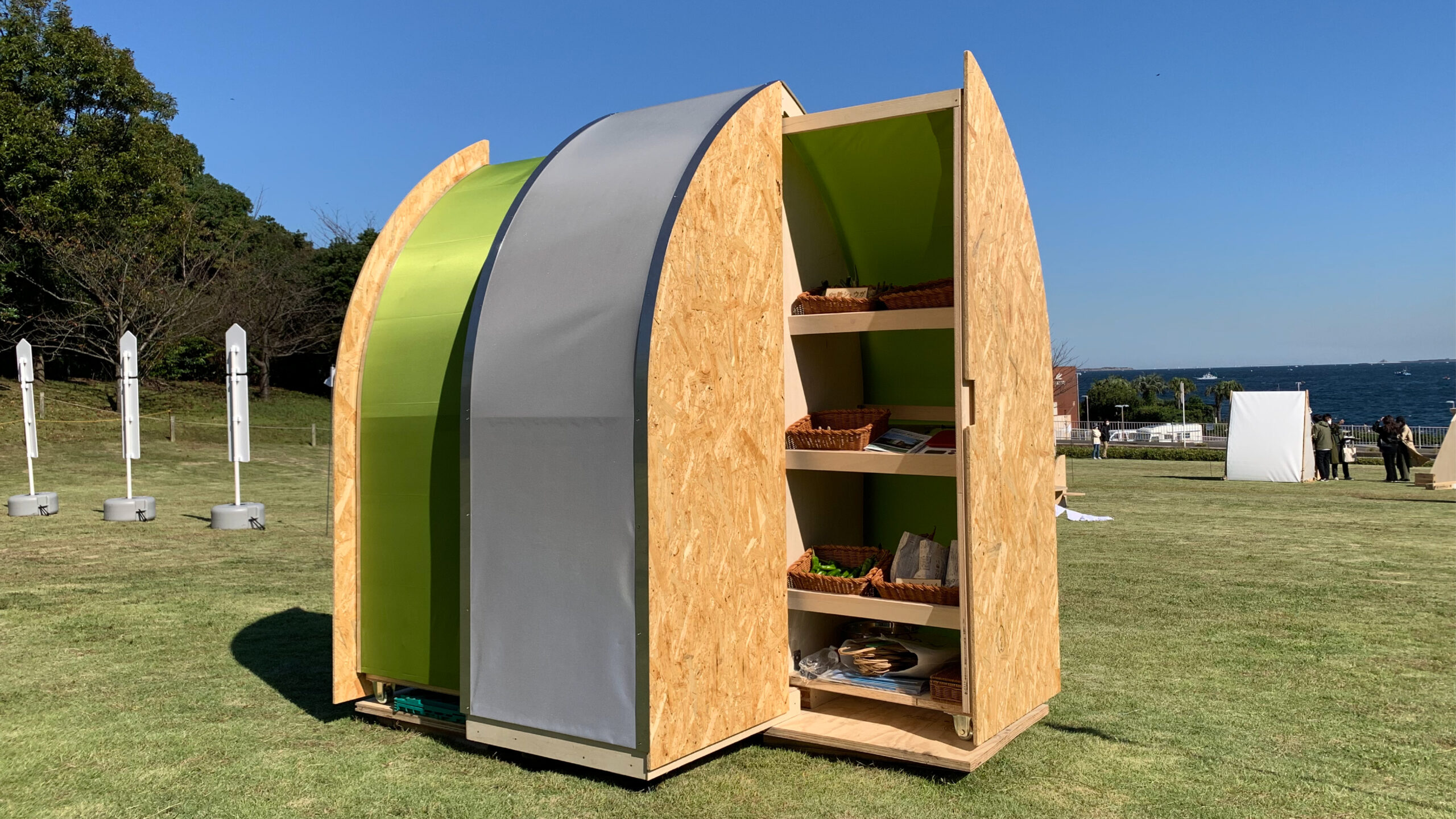
当年の作品は,環境配慮と資源の循環をコンセプトに再生材を使用した野菜の無人販売所である。持続可能な農業に取り組む農家とタイアップし,その農園で
収穫された新鮮な有機野菜を提供した。どこの農地にもあるありふれたビニールハウスの形を引用したこの小さな販売所は木材・使用済みペットボトルからつくられた再生ポリエステルを基材とする膜材・
廃棄野菜を特殊加工によって板状に固めた新材料から構成されている。また,両端の棚はスライドすることでコンパクトに収納できるようになっており,可動性も
備えた作品となっている。
koyart, in which our laboratory participates, is an organization that brings together university research labs, farmers, and businesses to tackle regional challenges. Focusing primarily on vegetable sales booths, it carries out projects aimed at revitalizing the region through the use of new technologies.
The Okochi Laboratory exhibited an unmanned vegetable kiosk—designed and built primarily by students—at the event “koyart: Encountering Kiosks, Art, and Fresh Local Vegetables,” held at the Yokosuka Museum of Art over two days, October 23 (Sat) and 24 (Sun), 2021. This was the laboratory’s first time exhibiting at the event.
This year’s entry was an unmanned vegetable kiosk made from recycled materials, designed around the concepts of environmental consideration and resource circulation. In collaboration with farmers committed to sustainable agriculture, the kiosk offered fresh organic vegetables harvested from their farms. This small kiosk, which draws inspiration from the common plastic greenhouses found on any farm, is constructed from wood; a membrane made from recycled polyester derived from used PET bottles; and
a new material created by compressing discarded vegetables into sheets through a special processing method. Additionally, the shelves at both ends slide in to allow for compact storage, making this a highly mobile installation.