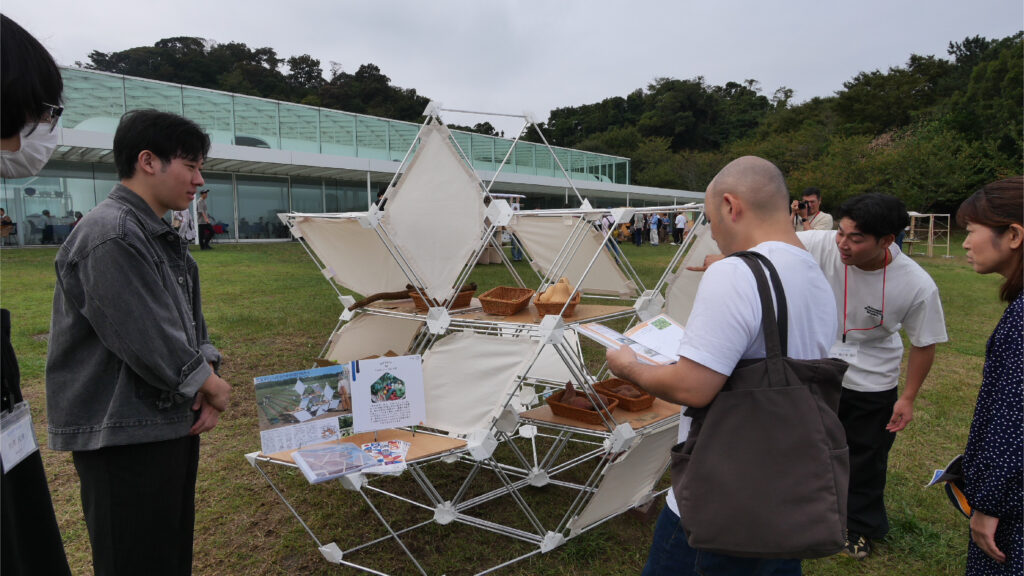
大河内研究室では2025年10月11日(土)~12日(日)の2日間,横須賀美術館で開催されるイベント『koyart~小屋とアートと地域の新鮮野菜に出会う~』に学生が主体でデザイン,製作した野菜の無人販売所を出展した。本年で5回目の出展である。
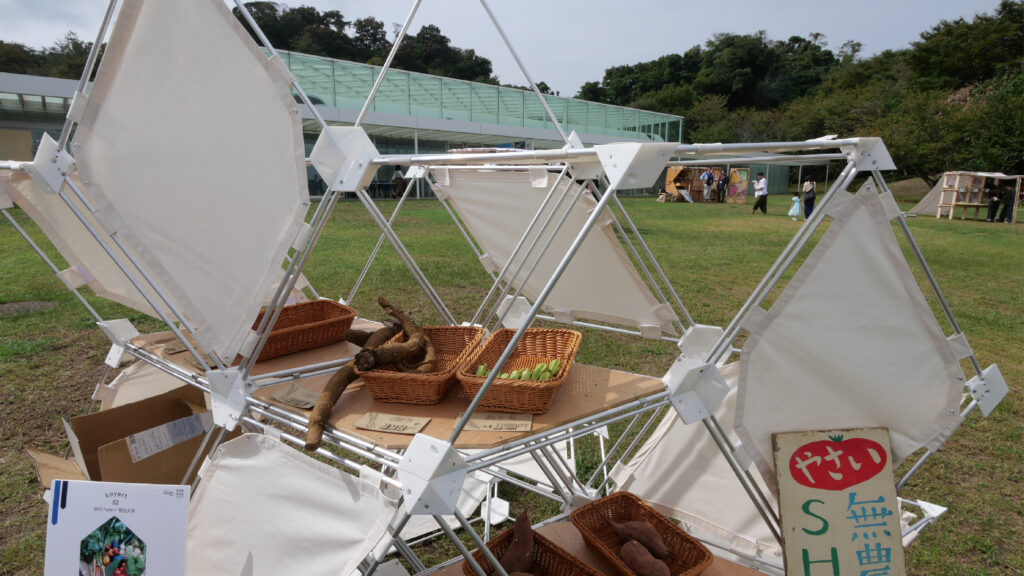
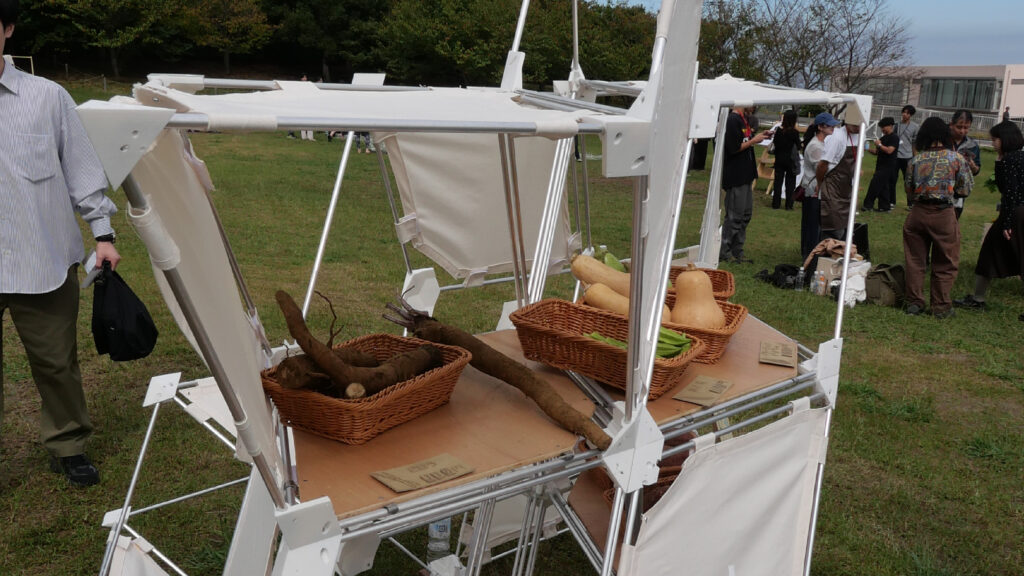
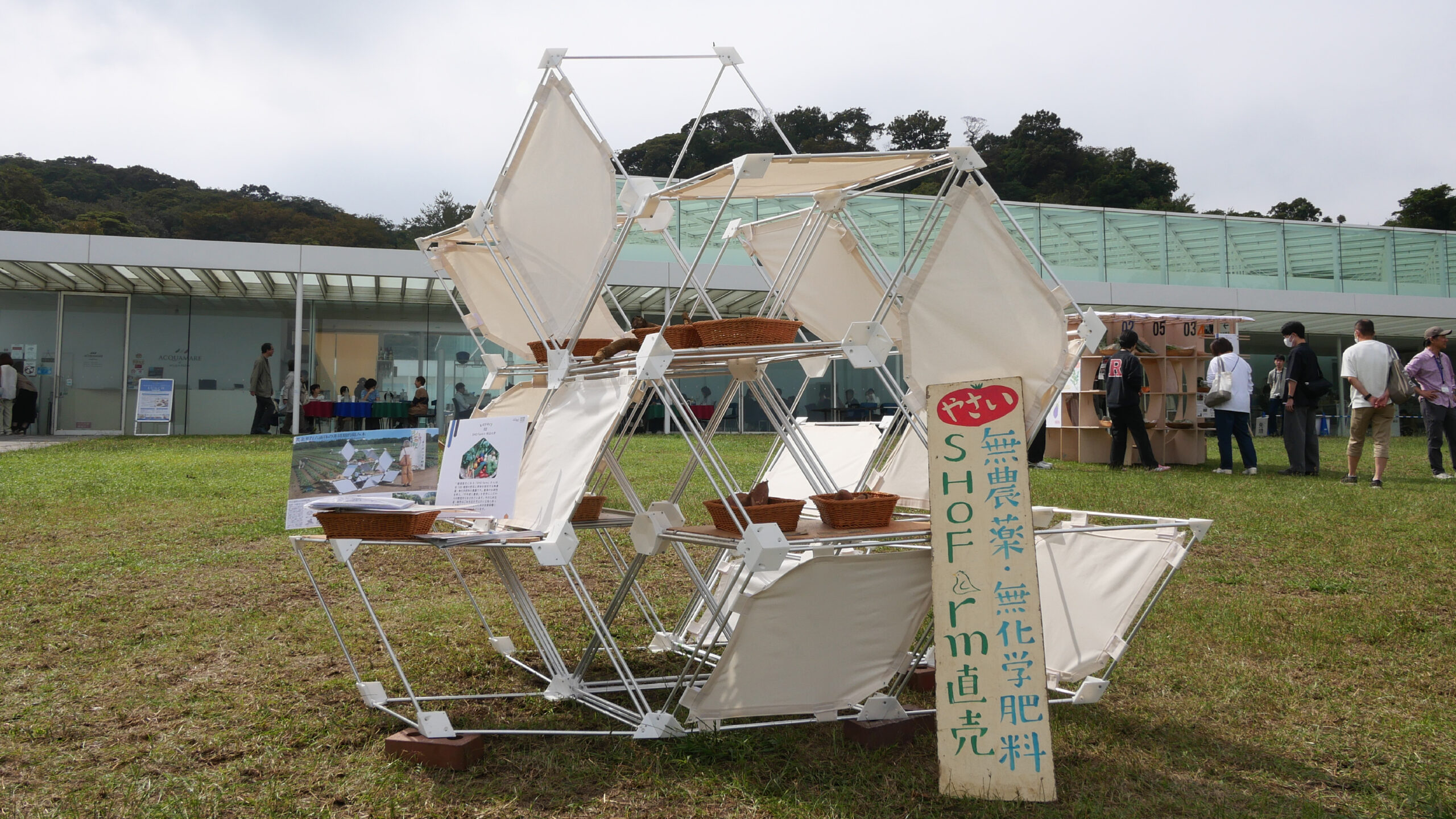
当年の作品は,黄金菱形を使ってできる2種の平行六面体を組み合わせてできる非周期充填を利用し,わずか2種類のユニットを組み換えることによって無限の拡張性をもつ野菜の無人販売所である。平行六面体の辺をアルミパイプ,頂点のジョイントを3Dプリンターで制作した軽量なユニットで構成されており,軽量かつ持ち運びが容易であることから,どのような敷地形状や陳列の様態にも追従できるといった特徴を持つ。棚板や日除け用の帆布もランダムに取り付けることができるため,季節やモードに応じて,多様な表情を見せる作品となっている。
“Non-Periodic Puzzle Blocks of the Golden Parallelepiped”
The Okochi Laboratory exhibited an unmanned vegetable kiosk—designed and built primarily by students—at the event “koyart: Encountering Cabins, Art, and Fresh Local Vegetables,” held at the Yokosuka Museum of Art over two days from Saturday, October 11, to Sunday, October 12, 2025. This marks the laboratory’s fifth consecutive year of participation.
This year’s installation is an unmanned vegetable kiosk that utilizes a non-periodic tiling created by combining two types of parallelepipeds formed from golden rhombuses; by rearranging just two types of units, it offers infinite expandability. Composed of lightweight units—with the edges of the parallelepipeds made of aluminum tubing and the joints at the vertices produced by a 3D printer—the structure is lightweight and easy to transport, allowing it to adapt to any site configuration or display arrangement. Since shelves and canvas awnings can be attached randomly, the installation takes on a variety of appearances depending on the season or current trends.