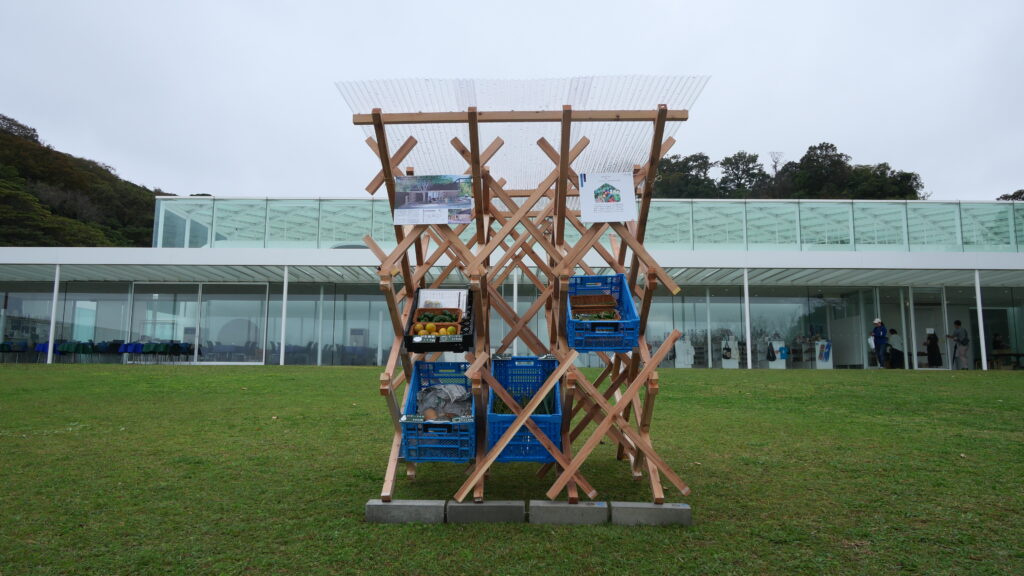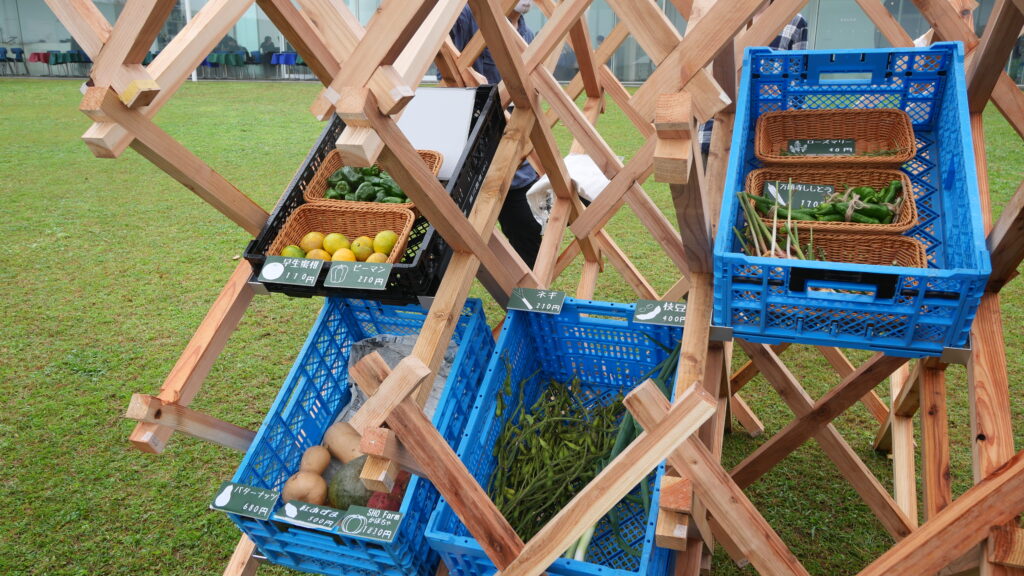
2026年10月24日(土)・25日(日)の2日間、横須賀美術館で開催されたイベント『koyart〜小屋とアートと地域の新鮮野菜に出会う〜』に、学生が主体となって設計・製作した野菜の無人販売所を出展した。本年で6回目の出展である。
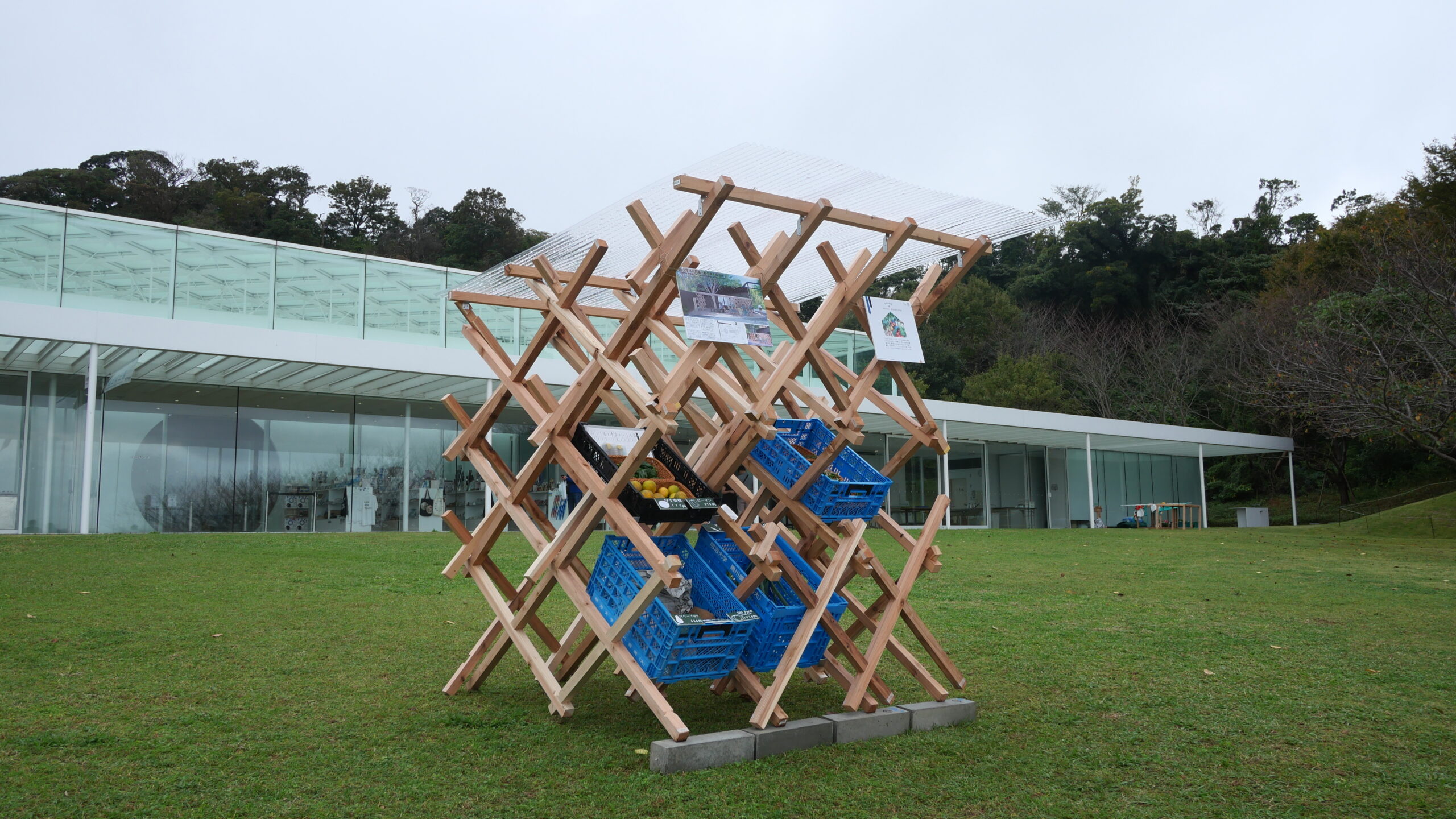
釘や金物を一切用いない日本の伝統的な木組み技術「地獄組」により、明治大学黒川農場の正門前に野菜の無人販売所を計画した。杉の小径材(45×45mm)をふんだんに用い、細い部材の集積が一つの樹冠をなすことで、正門前に佇む既存のカツラと呼応する、樹々の生い茂る雑木林のような風景の現れを目指した。施工はすべて学生自らの手によるセルフビルドである。
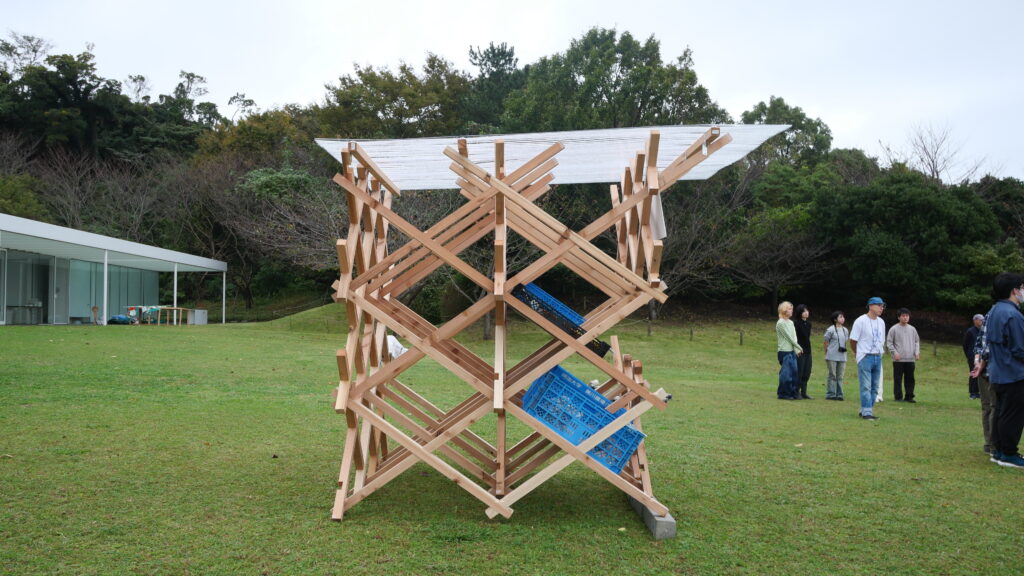
細い杉材に相欠きを施し、45度と30度のラチス格子へと組み上げた。この構面を間口方向に3スパン、奥行き方向に2スパン連ねて全体を構成している。
組み立て、運搬、解体の容易さにも留意し、イベント終了後は解体のうえ、黒川農場での設置を予定している。本プロジェクトは、2026年度地域連携活動助成金の支援と黒川農場のご協力を得て実施した。
Lattice Canopy: Meiji University Kurokawa Farm Unmanned Vegetable Stand
On 24–25 October 2026 (Sat–Sun), a student-designed and student-built unmanned vegetable stand was exhibited at koyart: Encounter Huts, Art and Fresh Local Vegetables, held at the Yokosuka Museum of Art. This was our sixth year of participation.
The stand was planned for the front gate of Meiji University’s Kurokawa Farm and built with jigoku-gumi, a traditional Japanese joinery technique that uses no nails or metal fittings. Using abundant slender cedar members (45 × 45 mm), we sought to create a landscape like a leafy copse. The accumulation of thin members forms a single canopy that resonates with the existing katsura tree standing before the gate. All construction was carried out by the students themselves as a self-build project.
Half-lapped cedar members are assembled into lattice grids at 45 and 30 degrees. These planes are joined in three spans across the width and two spans in depth to form the whole structure. Ease of assembly, transport, and dismantling was also a design consideration. After the event, the stand was dismantled, and its installation at Kurokawa Farm is planned. This project was carried out with the support of the 2026 Community Collaboration Activity Grant and the cooperation of Kurokawa Farm.